REVIEW Aug 2026 Sahjan Kooner: (darkforest) The Zone of Ghosts at FACT Liverpool
Jessie Tam
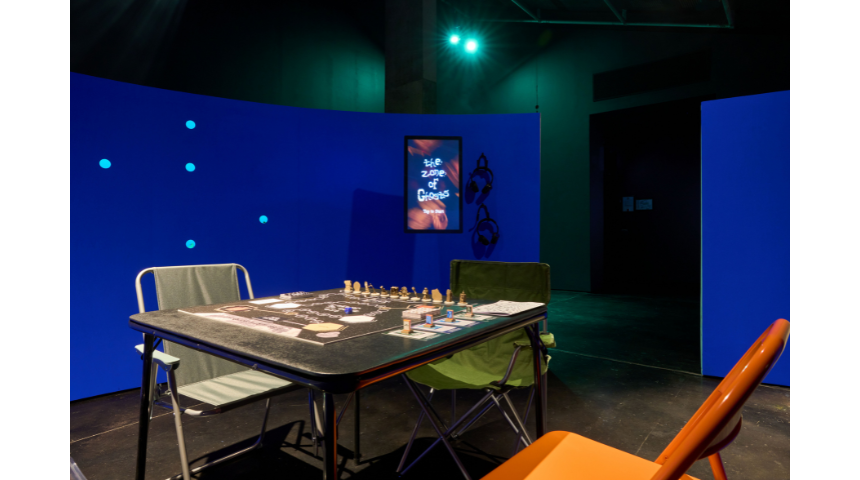
Sahjan Kooner, (darkforest) The Zone of Ghosts (2026). Installation view at FACT Liverpool. Photography by Rob Battersby
Artist Jessie Tam went to visit Sahjan Kooner’s beguiling multimedia exhibition at FACT, ‘(darkforest) The Zone of Ghosts’ and reviews it here. ‘(darkforest) The Zone of Ghosts’ is a FACT Liverpool commission, made in collaboration with young people from Global Friends, Unity Youth and Young Inspectors, jointly funded by the PH Holt Foundation, Eleanor Rathbone Charitable Trust, DWF Foundation, and Chrimes Family Charitable Trust.
The Zone of Ghosts digital game was developed by Poppy Curran Jones, with board game design by An Endless Supply, produced by Wigan Museums and FACT. It is a New Perspectives project, a partnership between Wigan Museums, Global Friends and FACT Liverpool part-funded by Art Fund.
The show continues at FACT in Liverpool until 16 August 2026.
Everyone remembers building imaginary worlds during a childhood sleepover. A pile of cushions became mountains, a blanket transformed into a cave, and a hand-drawn map led us somewhere new. As we played, the story unfolded. We added characters, objects, and adventure, building a world together. Those nights left us with a feeling that anything was possible.
Looking back, assigning ordinary objects magical meanings is not so different from what a museum does. Long before we understood what a museum was, we were already collecting, imagining, and telling stories. If that creative instinct has always been there, the question is not what a museum currently is, but what else it might become.
At FACT Liverpool, Sahjan Kooner: (darkforest) The Zone of Ghosts explores this question alongside young people from Liverpool and Leigh. The exhibition returns to the spirit of play, reimagining museums not as repositories for preserving the past, but as living archives where we forge stories and objects together.
Working in collaboration with ten young people aged 12–19 from local youth organisations – including Young Inspectors, Unity Youth, and Global Friends in Leigh – Kooner developed the project through a structured series of hands-on workshops that originally began at Wigan Museum. Sahjan invited participants to envision an alternative museum using storytelling, clay modelling, 3D scanning, storyboarding, and games. Instead of simply asking them to react to existing collections and inherited histories, the project empowered them to generate the exhibition’s stories, objects, and fictional world through their own lived experiences and imaginations.
This collaborative process extends beyond the physical gallery. In The Inside Zone podcast, visitors can listen to Kooner and FACT's Learning Team reflecting on their partnership. Dressed as NASA engineers, they describe how they listened, adapted, and built the world together, framing co-production not as a single afternoon workshop, but as an evolving, ongoing conversation.
Stepping into the gallery, the space is shrouded in near-darkness, built around a central infinity symbol-shaped structure. The ambient sounds of a woodland guide you forward while a soft green mist spreads across the floor. You follow a winding path as if navigating a dense forest trail, never a straight route, but a deliberate wandering. The path eventually opens into a clearing. Beneath a warm spotlight sits a table surrounded by four empty chairs. As you move closer, a board game comes into view. Another group of players has just left, or the next adventure is about to begin.
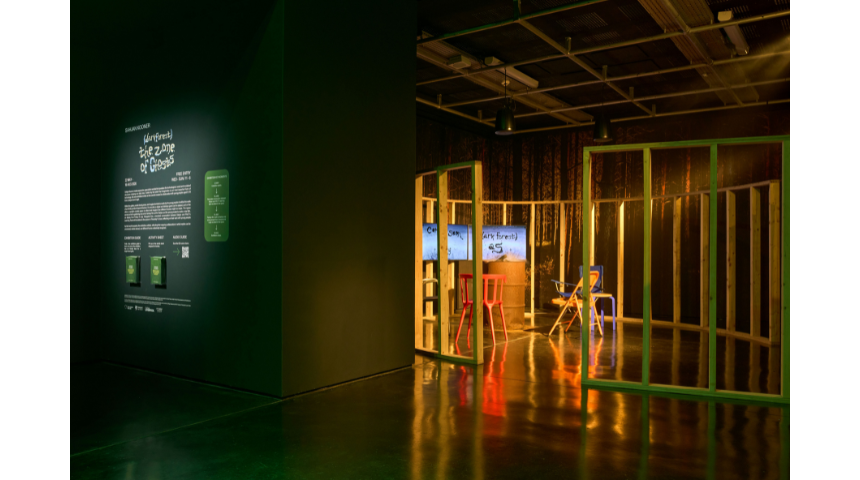
Sahjan Kooner, (darkforest) The Zone of Ghosts (2026). Installation view at FACT Liverpool. Photography by Rob Battersby
Before you turn a single card or touch any object, the exhibition has already enticed you into its world.
Drawing inspiration from Wigan Museum's collection, the board game (designed by An Endless Supply with digital development by Poppy Curran Jones) reimagines the museum as an active, collaborative quest. Rather than observing artefacts from a distance, players interact with them through movement and shared storytelling.
Rolling dice as a wizard, a linguist, an artificial intelligence, or a time traveller, players navigate the board between the fictional Museum of Life and the Dark Forest. Along the way, the group forages and deposits twelve unique object tokens, 3D-printed and clay artefacts the young participants created, each carrying invented histories and magical powers.
When claiming an object, a player looks up its story in the guidebook and reads it to the group. Players then carry these artefacts to Sanctuary spaces across the map, unlocking new paths together. Story and action cards prompt reflection and sudden narrative twists. Players do not compete to win; they collaborate to restore missing histories.
Throughout the game, players draw cards posing simple questions: What makes an ideal museum? Who is a museum for? What stories deserve to be collected, kept, and remembered? These questions spark genuine dialogue, inviting players to share memories, opinions, and possibilities as they continually imagine what a museum might become.
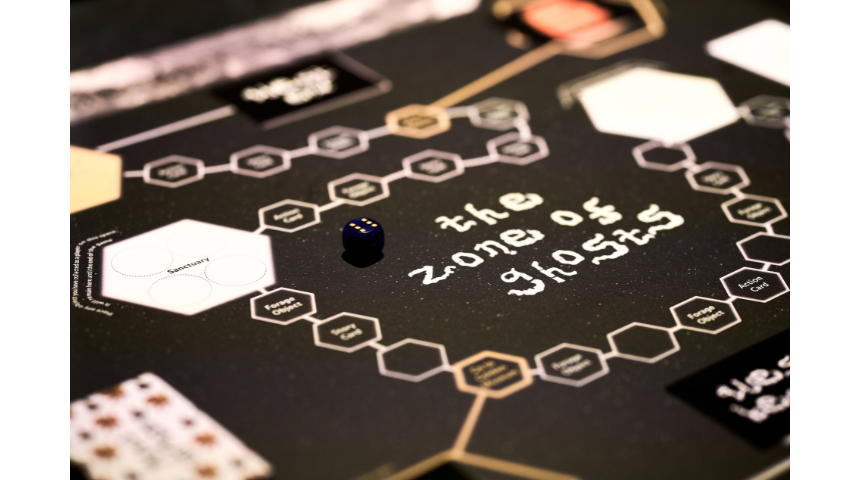
Sahjan Kooner, (darkforest) The Zone of Ghosts (2026). Installation view at FACT Liverpool. Photography by Rob Battersby
Yet the cards do more than explain rules. Like fragments of a fantasy novel, they weave imagery directly into the game:
"A fog swallows the players until objects light their way."
"An owl asks which object in your own life matters most."
"A whispering gallery wonder…"
"Museums remember, but who decides what to forget?"
As birdsong, footsteps, and rustling leaves fill the gallery space, this surrounding soundscape shifts how you experience the game, blurring the line between the room and the table. Moving a piece across the board mirrors the physical sensation of wandering along a woodland trail towards the forest’s depth. The game no longer feels confined to the board. It possesses a strange, sentient yearning which entangles the fiction of the board with the physical space around it.
A museum preserves objects, but it also lives as a space where people constantly rewrite stories. In the same way, the board game rules become active, living guides, prompting players to read the cards, listen to one another, and interpret the surrounding forest. Players do not receive meaning in advance; they create it through the act of play.
Over months of workshops held across FACT and Wigan Museum, these imagined artefacts took physical shape. Inspired by Wigan Museum's collection, the young participants invented entirely new artefacts instead of reproducing historical ones. Each handmade item carries its own absurd history and impossible power.
Among the exhibition’s speculative pieces, artefacts are preserving LeBron James’ footprint, signature, and even his glutes, supposedly cast after a mythic visit to Wigan. Using clay modelling and 3D scanning, the young participants turned local urban folklore into museum objects. By inventing a world where a global superstar visits their hometown, the youth reframe Wigan as a place worthy of legend, using humour and stories to bring their own lived experience and imagination directly into the museum.
Playful, surreal, and surprisingly tender, these objects question what truly deserves preservation and answer through wit and play. Evolving between raw clay, digital animation, and 3D printing, these artefacts gather new context with every medium they cross.
For centuries, museums have served as places where students learned by observing and sketching sculptures to master technique and composition. Sahjan Kooner: (darkforest) The Zone of Ghosts proposes a different model. The museum collection remains the starting point but learning shifts from copying to creating.
The young participants become myth makers, using fantasy to craft objects that carry their own cultural references, dreams, and surreal stories. Teleporting artefacts, protective sanctuaries, and magical objects. While we may treat museum objects as evidence of the past, Kooner’s exhibition uses playfulness to help us see single, official histories differently. The project suggests a museum is not merely a repository of past culture, but a place where future collections might begin.
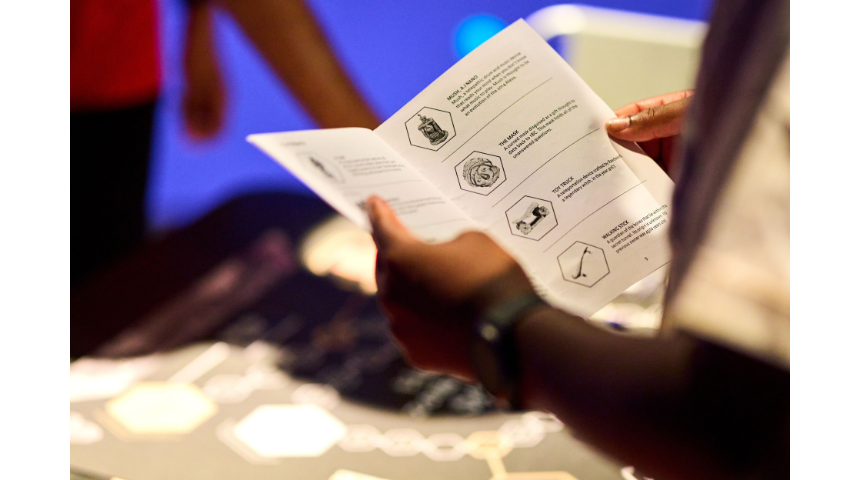
Sahjan Kooner, (darkforest) The Zone of Ghosts (2026). Installation view at FACT Liverpool. Photography by Rob Battersby
Nearby, a video screen guides visitors through the adventure with narration, evocative music, and animated versions of the clay artefacts. Their uneven surfaces and fingerprints offer a tangible reminder of how someone moulded the clay with their hands and created it first before it ever became digital. After all, every artefact in a museum began with someone’s act of making and imagining. Moving between craft and technology, the exhibition mirrors the way contemporary museums bridge physical collections and digital archives.
Small recesses sit inside the gallery walls and reveal themselves as visitors draw near. Inside, 3D-printed versions of the clay artefacts shimmer gently under focused light. The effect recalls digital adventure games, where a glowing item signals a clue or a secret worth uncovering. Here, the museum adopts that same language of invitation: these objects wait patiently for human curiosity, coming alive the moment a visitor pauses to discover the stories they hold.
As Paul Booth argues, board games communicate not only through written text but through the act of play itself. Meaning appears as players negotiate rules, stories, and one another. In Sahjan Kooner: (darkforest) The Zone of Ghosts, players shape the museum through their participation. The young people do not inherit its stories, but remake them through fantasy, conversation, and play. Clara Fernández-Vara reminds us that games speak through what they depict and through how players engage with them.
Beyond the board game, a simulated campfire surrounded by folding chairs and a glowing steel fire pit filled with timber and smoke offers a place to rest and reflect. Resembling both a cozy gathering spot and a speculative film set, the campfire becomes a setting where memories, myths, and futures take shape collectively. It suggests museums grow not merely through objects, but through conversation.
The campfire also acts as a gathering area, a screening space, and a fantasy film set for a new work Kooner and the young collaborators created, filmed both in the gallery and on location at Princes Park. Spanning character design, costume design, scriptwriting, and performance, the film The Darkforest As expands the world of Sahjan Kooner: (darkforest) The Zone of Ghosts even further.
Kooner explains: “We try to build a tempo where discovery happens, a discovery of the capacity to make something, and a discovery of how to exchange with other people.” They compare the process to an exquisite corpse, where one person begins a story or structure, and another continues it. This approach reflects Kooner’s wider practice, which uses science fiction, fantasy, and speculation to rethink inherited histories. Whether exploring personal ancestral roots in North India or reimagining museum collections in Northwest England, Kooner treats memory and imagination as essential tools for world-building.
If museums have traditionally preserved the past, Sahjan Kooner: (darkforest) The Zone of Ghosts proposes something equally vital: museums can become a way of making those futures collectively. Like the stories we built as children, around the campfire and across the game board, we add memory, object, and possibility.
For Kooner, the project offered a chance to explore the museum’s past and future alongside young people, listening to how they imagine their own place within it. In the process, the participants built a genuine sense of ownership over objects and stories they created.
Sahjan Kooner: (darkforest) The Zone of Ghosts shows how museum learning can go beyond gallery walls. Rather than asking visitors to look at objects, the exhibition invites people to play, guess, and imagine together, breaking down intellectual barriers so everyone can experiment with their own creativity.
Through video and installation, Kooner’s work explores love, hope, and imagination while questioning the technological and social forces around us. This approach continues in Sahjan Kooner: (darkforest) The Zone of Ghosts, where stories travel across generations, objects carry rich histories, and new futures take shape through collaboration.
The campfire witnessed this process and what Kooner describes as the dreamlike feeling of sharing stories just before nightfall, a moment when familiar things can suddenly appear different. At the heart of the project lies what they call “the freedom to dream.”
Across physical installations and algorithmically generated worlds, this exhibition redistributes authorship slowly through conversation, making, play, and shared imagination.
Gathering around the campfire, beside shimmering clay artefacts and across the board game, we imagine institutions otherwise.
After leaving the gallery, visitors can continue the adventure through the digital version of Sahjan Kooner: (darkforest) The Zone of Ghosts on FACT’s website, where landscapes, objects, and clues keep this evolving world open.
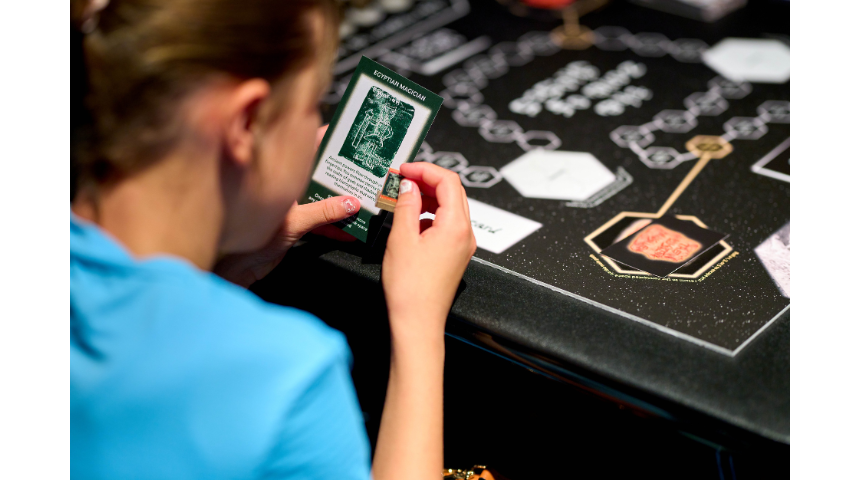
Sahjan Kooner, (darkforest) The Zone of Ghosts (2026). Installation view at FACT Liverpool. Photography by Rob Battersby